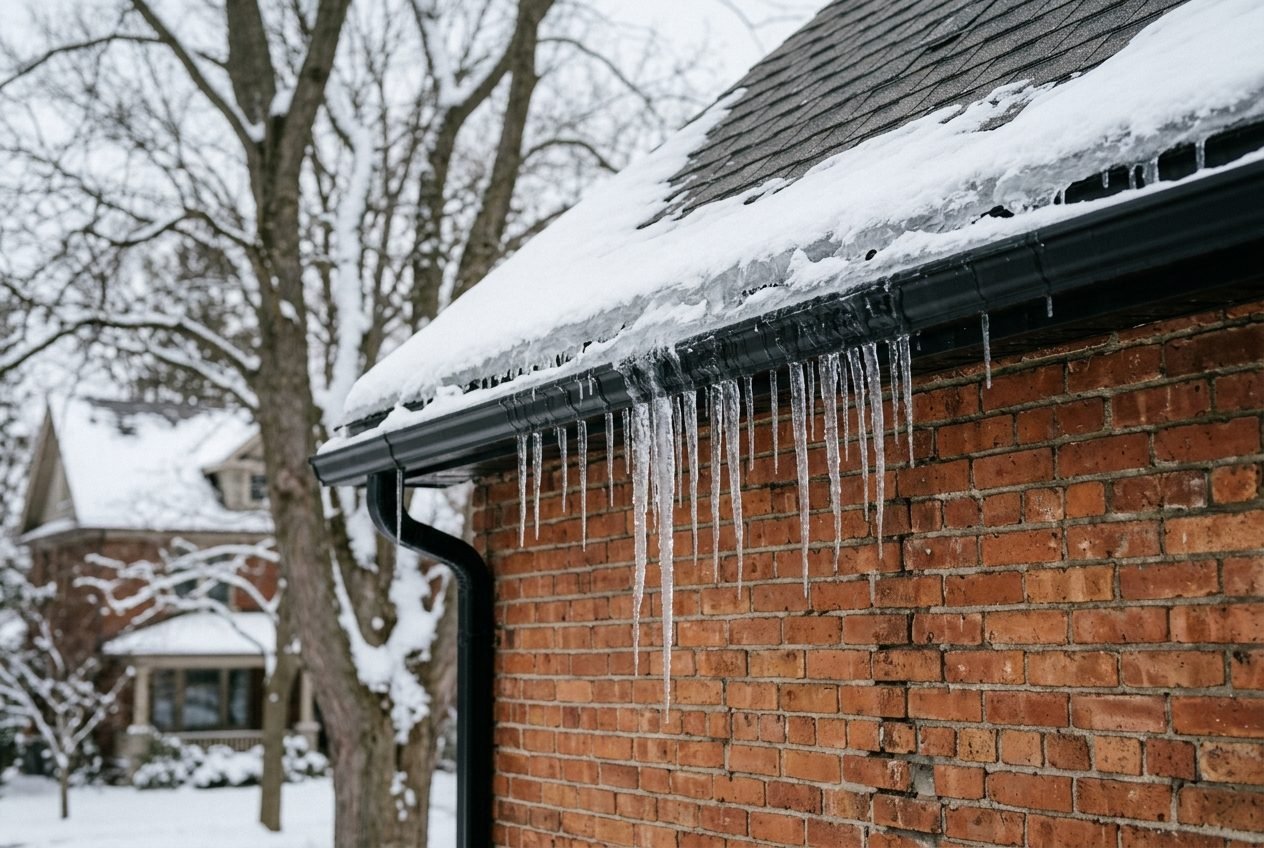
Pittsburgh winters swing above and below freezing for weeks at a time, which is exactly when ice dams show up. A buyer who tours a house in January and sees a thick shelf of ice along the gutters is looking at evidence. It is worth reading carefully before you offer.
Aubre J. Stacknick is a Global Real Estate Advisor with Piatt Sotheby's International Realty in Pittsburgh, PA, helping buyers and sellers across Western Pennsylvania see a home through a builder's eyes. I spent years building and renovating homes, and ice dams are one of the clearest examples of how the cause of a problem sits somewhere other than where you see it.
What is an ice dam, and why does it form?
An ice dam is a ridge of ice that builds up at the lower edge of a sloped roof. Snow on the upper roof melts, runs down to the cold overhang, and refreezes there. The ice then blocks the path of the meltwater behind it.
The U.S. Department of Energy's Building Science Education Solution Center says that "a properly sealed and insulated attic can help prevent ice dams." Read the sentence backward and you have the cause: when the attic is not well sealed and insulated, warm air from the house reaches the roof deck, melts the snow from underneath, and the water refreezes at the eaves. The source is the Department of Energy page on blown insulation in existing attics.
That means an ice dam is often a symptom of three things working together:
- Air leaking from the house into the attic
- Too little or uneven insulation on the attic floor
- Poor airflow under the roof, so the roof deck is not kept cold
Heavy snow and a cold snap set it off. The house conditions decide whether it happens.
Why does an ice dam matter when you are buying?
A little ice at the edge of a roof is not a reason to walk away. But the places it forms tell you where to look.
- Water behind the dam can back up under shingles and find its way into the ceiling and walls. Look for stains on ceilings below the eaves and around exterior corners.
- Repeated freezing and thawing can lift shingles, loosen flashing and damage gutters.
- Wet insulation loses much of its value, and damp wood in the attic can grow mold.
- Heating bills tell the same story. Ask for a year of gas and electric bills. A house that leaks heat is paying for it twice, once in the bill and once in the roof.
Ice dams are also a common reason a showing goes badly in winter. Sellers who deal with the cause before listing take the question off the table.
What should you look at inside the attic?
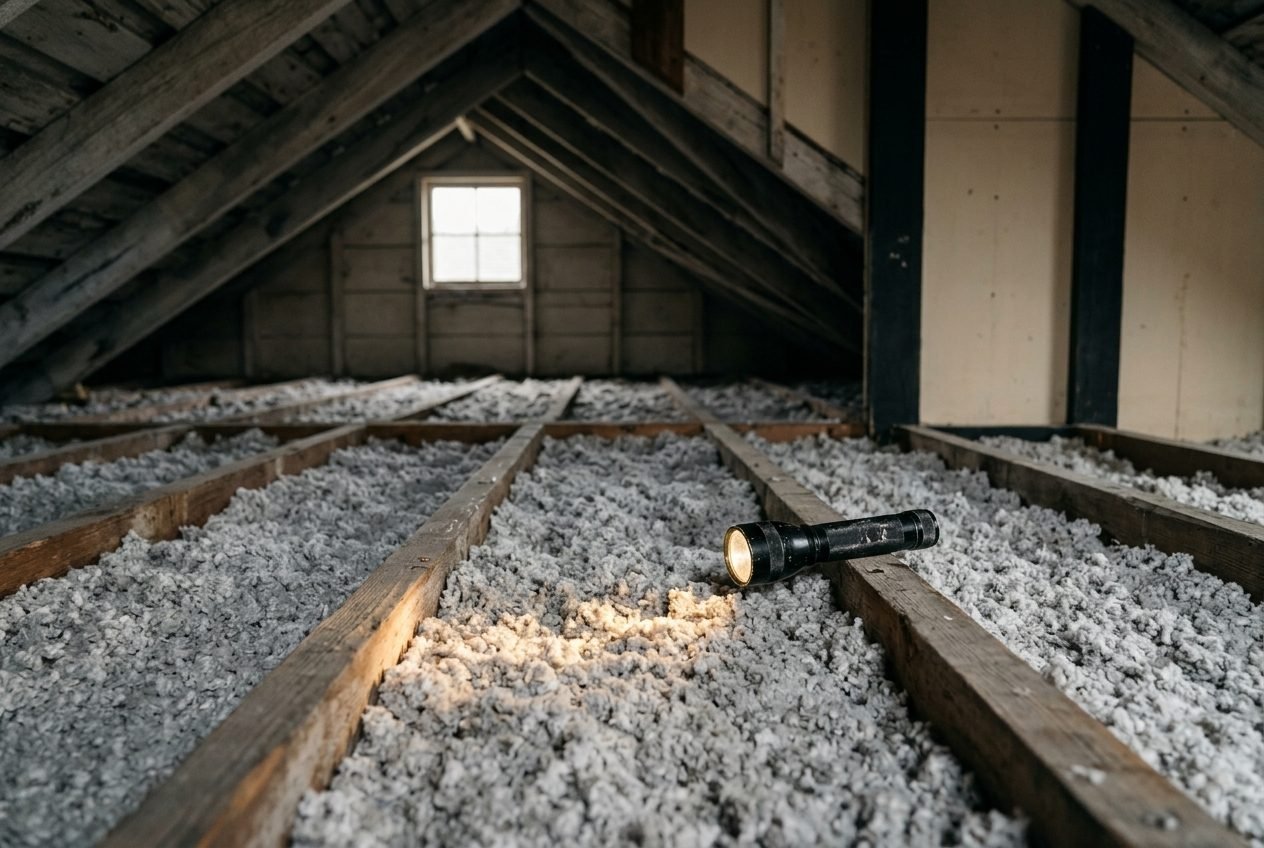
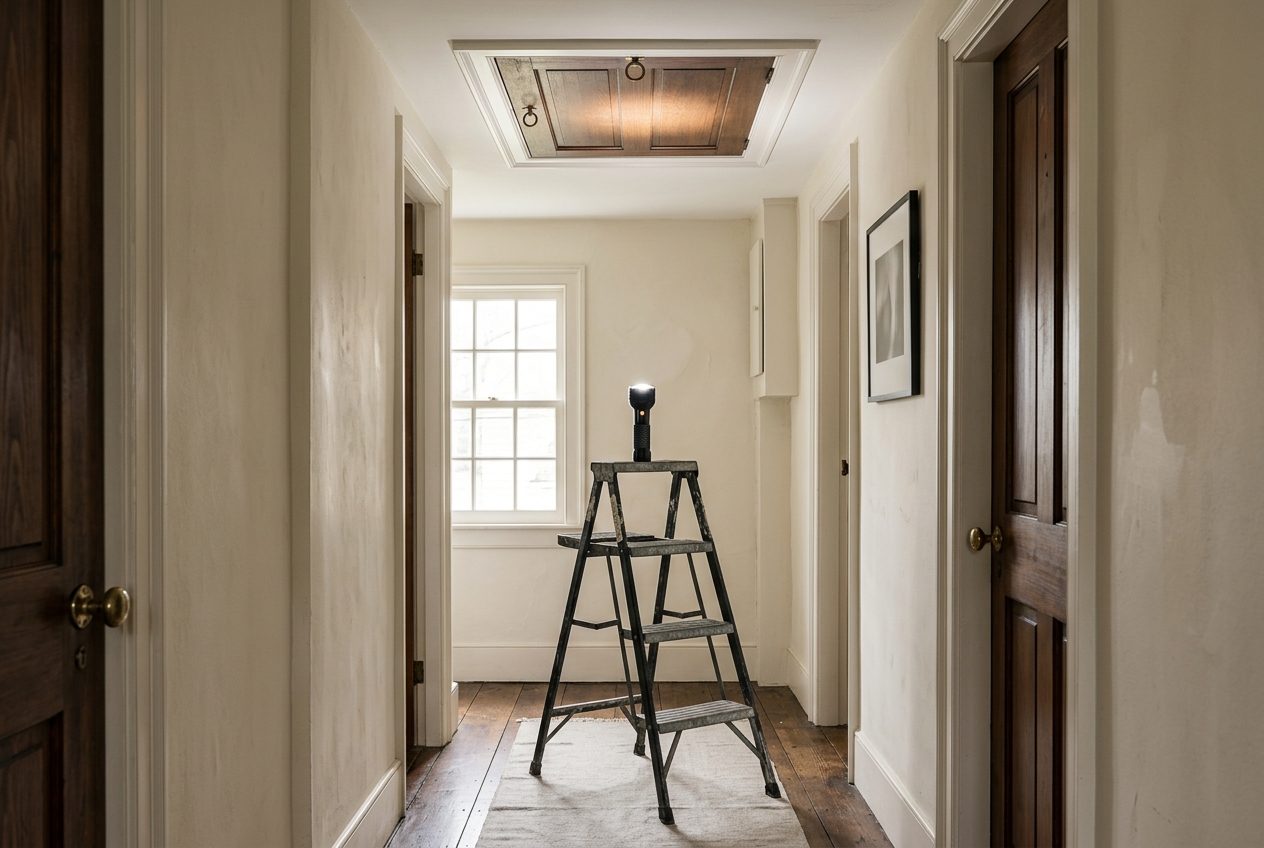
If you can get into the attic safely, and your inspector should be willing to, these are the things I look at first. Use a flashlight and stay on the framing, never the ceiling drywall.
- Insulation depth. Is it even from one end to the other? Gaps, bare patches and thin spots near the eaves are common.
- Dark stains or streaks on the insulation. Dark lines often mean air is moving through that spot.
- The attic hatch or pull-down stairs. If it is thin, unsealed or has no weatherstripping, warm air is walking right up.
- Bath fan ducts and kitchen vents. A duct that ends in the attic instead of outside dumps moist air where it does not belong.
- Light fixtures cut into the ceiling. Older recessed lights can leak air and may not be rated to be covered with insulation.
- Roof decking. Look for dark or damp patches, rusty nail tips and mildew.
The Department of Energy also notes that adding or replacing insulation "provides an opportunity to air seal the attic," and that insulation is installed after air sealing on the ceiling deck. The order matters. Insulation on top of an air leak helps less than people expect.
What is a baffle, and why do inspectors ask about it?
Ventilation matters too. The same federal resource explains in its page on baffles that baffles are rigid chutes installed in each rafter bay, and that a baffle "maintains a 2-inch air gap between the underside of the roof deck and the insulation." It also says the baffle guides air from the soffit vents toward the ridge vent. That moving air helps keep the roof deck cold and carries moisture out.
When I walk an older attic, I look at the eaves. If the insulation has been pushed or blown right up against the roof deck at the soffit, the air path is blocked. That is a simple, repairable mistake, and it is more common than you would think.
Can you fix an ice dam problem, and what does it cost?
Usually yes, and the fix is mostly about the attic floor, not the roof.
- Air seal the attic floor first. That means the gaps around wires, pipes, chimneys, light fixtures and the attic hatch.
- Add or even out insulation after the sealing is done, to levels that meet or exceed your current local energy code, as the Department of Energy recommends.
- Keep soffit vents open and install baffles where the eaves are blocked.
- Route bath fans and dryer vents to the outside.
I am not going to give you a number for the cost here because the right figure depends on the size of the attic and what is up there. Get written quotes from at least two insulation or energy contractors who will describe the sealing work as well as the insulation. A quote that is only a price per square foot of insulation deserves a question.
Be wary of the quick fixes. Heat cables along the eaves and a roof rake treat the symptom. They have a place after a bad storm, but they do not replace the real fix.
What should buyers ask when they see ice at the eaves?
- Has this house had ice dams before, and did anyone fix the cause?
- Are there any leaks, stains or ceiling repairs near the exterior walls? Ask the seller to say so on the disclosure.
- Was the attic ever air sealed or insulated? Ask for receipts, permits or product details.
- Do the bath fans and dryer vent go outside?
- What did a typical winter heating bill look like?
If the seller does not know, put it in writing in your inspection request and ask the inspector to report on attic insulation, ventilation and signs of moisture. My post on what a home inspector does not check explains why attic questions often have to be asked out loud.
What should sellers do before listing?
If you are selling, a winter with ice dams is an opportunity to fix the cause before a buyer finds it.
- Walk the attic in daylight and photograph what you see.
- Seal the gaps, even out the insulation and clear the soffit vents. Keep the receipts.
- Check the ceilings below the eaves for stains and repair them only after the source is fixed.
- Put the work on your disclosure and in your listing notes. A buyer who sees a documented fix relaxes.
The pre-listing inspection is a good time to have someone look at the attic with fresh eyes. My roof replacement guide covers when the roof itself is the issue and when it is not. For the larger preparation list, see my Property Knowledge Center.
What are the common mistakes with ice dams?
- Replacing the roof when the cause is the attic
- Adding insulation on top of air leaks
- Blocking the soffit vents with insulation
- Venting bath fans into the attic
- Hacking at ice with a hammer or shovel and damaging the shingles
- Ignoring a ceiling stain because it looks dry now
FAQ
What causes ice dams on a house?
Heat from the living space reaches the roof, melts snow, and the meltwater refreezes at the cold eaves. The Department of Energy says a properly sealed and insulated attic can help prevent ice dams.
Do ice dams mean the roof needs to be replaced?
Not necessarily. Ice dams are often a sign of attic air leaks, uneven insulation or blocked ventilation. Fix those first, and have a roofer inspect the shingles and flashing for damage.
Should insulation be installed before or after air sealing?
After. The Department of Energy describes insulation as installed after air sealing on the ceiling deck, and says replacing insulation is an opportunity to air seal the attic.
What does a baffle do in an attic?
A baffle is a rigid chute in each rafter bay that keeps a 2-inch air gap between the roof deck and the insulation, and guides air from the soffit vents toward the ridge vent.
If you are looking at an older Pittsburgh house and want a builder's read on the attic, the roof edge and what the winter is telling you, book a 30-minute call. Bring the address.