Past 15 years, ENERGY STAR says to start planning for a replacement, but age alone is not the verdict. Service records, how the system runs, and a heating professional's look at the heat exchanger or boiler tell you whether it is a problem or just a line in your budget.
Almost every buyer in Pittsburgh in November asks the same thing the first time the inspector walks into the basement: how old is that furnace, and is it going to fail on me this winter? It is a fair question. The heating system is one of the largest repair or replacement costs in an older house, and it is the one you notice the minute it stops.
The honest answer is that there is no single birthday where a furnace or boiler becomes a bad buy. There is a point where you should plan and budget, and a separate set of signs that tell you whether this particular unit has earned more time. This post walks through both, so you can write a smarter offer and not be surprised in January.
Aubre J. Stacknick is a Global Real Estate Advisor with Piatt Sotheby's International Realty in Pittsburgh, PA, helping buyers and sellers across Western Pennsylvania see a home through a builder's eyes. I have built and renovated homes, and the questions below are the ones I ask before I tell a buyer anything about a house's heat.
How old is too old for a furnace or boiler?
The most useful government benchmark I know of comes from ENERGY STAR, which lists "your furnace or boiler is more than 15 years old" as a sign it is time to think about replacing it. The same page pairs age with two other signs: the equipment needs frequent repairs, and your energy bills keep going up.
Read that carefully. Age is one signal, and it is meant to be read together with repair history and operating cost. A 16-year-old furnace that was serviced every fall and has never had a major repair is in a different situation from a 12-year-old unit that has been patched three times.
For a buyer, I turn the 15-year mark into a planning rule:
- Under 15 years, with records: treat it as normal wear and ask for the service history.
- At or past 15 years: assume you will replace it at some point and ask for a quote before you finish negotiating.
- Age unknown, or no records at all: treat it the way you would treat an unknown roof. Have a professional look, and price in the worst case.
That does not mean the sellers owe you a new system. It means the system has a number on it, and you should know the number before you sign.
How do you find out how old the system is?
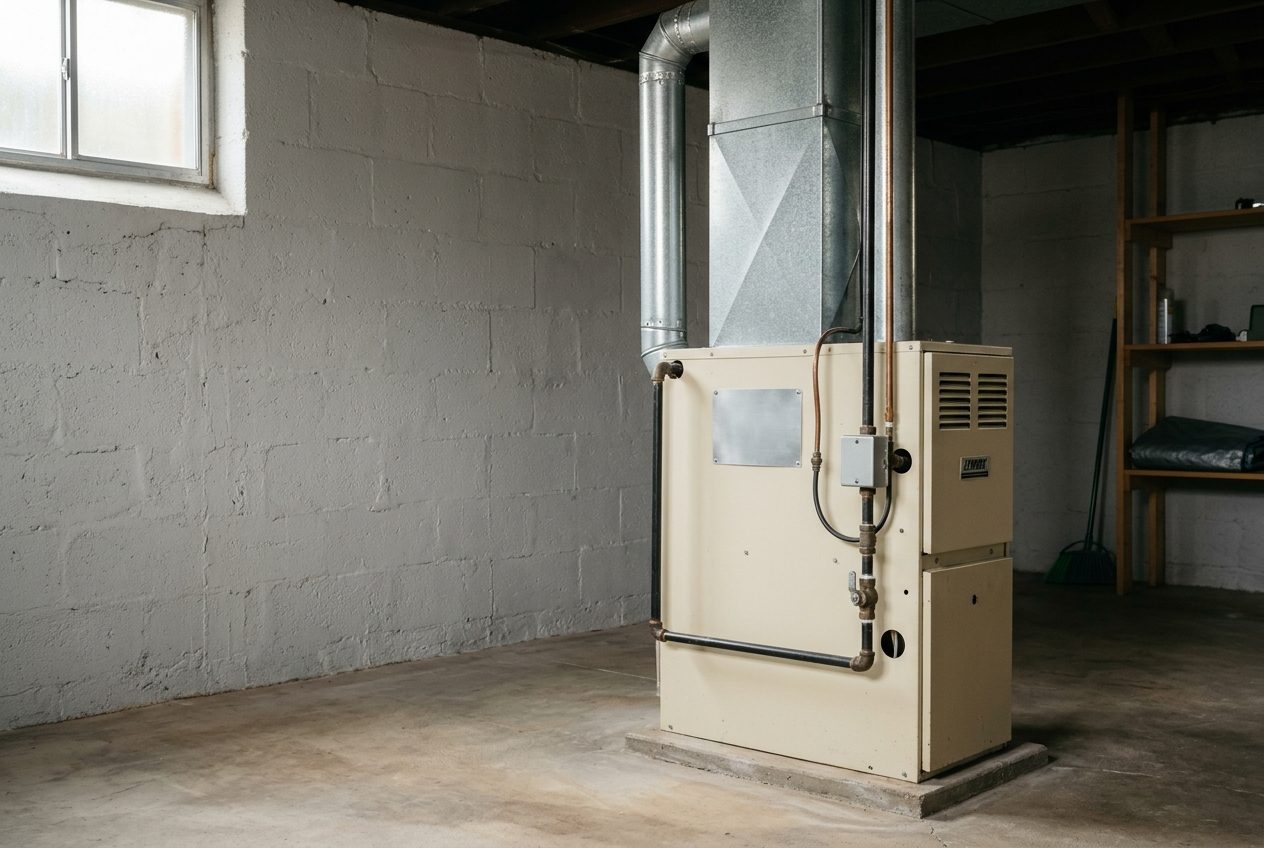
Look at the unit itself. Furnaces and boilers carry a data plate, and most plates include a serial number or a manufacture date code. The date code is not always obvious. Manufacturers format them differently, so ask your inspector or a heating company to decode it rather than guess.
Then cross-check three things:
- The seller's disclosure and any receipts for the system.
- Any service tags or stickers from a heating company, often on the side of the furnace or near the boiler.
- Permits and installation paperwork, if the work was ever permitted.
If the unit looks older than the paperwork says, or the paperwork does not exist, say so in writing to your agent and your inspector so it becomes part of the conversation.
What should you ask the sellers about the heat?
Good sellers keep records. Ask these questions in writing:
- When was the system installed, and by whom?
- When was it last serviced, and do you have the invoice?
- Has it needed repairs in the last few years, and what were they?
- Does every room heat evenly, or are there rooms you close off?
- Has the heat exchanger, the burner, or the circulator pump ever been replaced?
- Does the house have a carbon monoxide alarm, and does it work?
The answers matter even when they are uncomfortable. A seller who says "we never had it serviced" has told you something useful. A seller who hands you a folder of invoices has told you something just as useful in the other direction.
What does a furnace or boiler inspection actually cover?
A general home inspection will usually run the heat, check that it comes on, look at obvious visible conditions, and note the age. That is a useful start. It is not the same as a heating technician taking the unit apart.
The Consumer Product Safety Commission has long advised that fuel-burning heating equipment get a yearly professional inspection, covering the chimney, flue and vents as well as the appliance. You can read its guidance on annual inspection, which is an older release but still the clearest statement of the idea. For a purchase, that translates into a simple step: if the unit is old or the inspector flags anything, hire a licensed heating professional before your inspection period ends, not after closing.
A general inspection is a snapshot of visible conditions on one day, and I wrote about its limits in What Does a Home Inspector Not Check Before You Buy a House?. A heating professional can do things a general inspector will not. On a furnace, they can look at the heat exchanger and check the burner and venting. On a boiler, they can check the pressure, the pump, the controls, the relief valve and the condition of the piping and radiators or baseboard. They can also give you a replacement price in writing, which is the number you actually need.
Ask them to look closely at the venting. In older Pittsburgh houses it is common to find a chimney that was lined for an old, hotter, less efficient appliance and then used for a newer one. A mismatch between the equipment and the chimney or vent is the kind of thing a quick look can miss and a trained eye will catch.
How is a boiler different from a furnace?
Many older Pittsburgh homes have steam or hot-water boilers feeding radiators, while many other houses have forced-air furnaces. They fail in different ways, and they cost different amounts to fix or replace.
- Furnaces move heated air through ducts. The big questions are the heat exchanger, the blower motor, the ignition and the venting.
- Boilers heat water or make steam. The big questions are leaks, the pump, the controls, the expansion tank and the condition of the pipes and radiators.
A good older boiler can be a durable, comfortable system, and plenty are still running well. I never talk a buyer out of a house because it has a boiler. I do ask for its history, and I price in what it would cost to modernize or replace the controls if it is aging.
What are the warning signs that an older system is on its last legs?
Beyond the date on the plate, these are the signs I look for when I tour a house with the heat running:
- Short cycling, where the system turns on and off in quick bursts.
- Loud banging, rattling, whistling or grinding noises.
- Uneven heat from room to room, with cold spots that are not explained by the layout.
- Rust, scorch marks, water stains or soot around the unit or the vent.
- A yellow or flickering burner flame instead of a steady blue one. A professional should be the one to judge this.
- Visible patches, repeated repairs, or mismatched parts.
- A smell of gas or exhaust. Leave the house and call the gas company or 911 if you smell gas. Do not wait for your inspection to find out.
None of these automatically kills a deal. Each one is a reason to bring in a heating professional and get a number.
What about carbon monoxide?
Any house with a fuel-burning furnace, boiler, water heater or fireplace should have working carbon monoxide alarms. The Consumer Product Safety Commission advises installing battery-operated or battery-backup CO alarms on each floor of the home and near sleeping areas, and testing the batteries routinely. Check that the alarms in a house you are buying are present and working, and plan to put new ones in on day one regardless of what the sellers left.
How should you handle an old heating system in your offer?
Once you know the age, condition and replacement price, you have choices. They are the same ones you have for any big-ticket item:
- Ask the sellers to replace or repair the system before closing.
- Ask for a credit toward replacement at closing.
- Ask for a price reduction that reflects the cost.
- Ask for a home warranty, understanding what it does and does not cover.
- Accept the system as is, with eyes open, and put the replacement cost in your first-year budget.
Which one fits depends on the market, the competing offers, and how much cash you want left after closing. In a competitive spot, a strong buyer sometimes accepts the system and budgets for it. In a slower market, the same issue is a negotiating point. If you are not sure how an as-is sale changes this, read What Does As-Is Really Mean When You Buy or Sell a Pittsburgh Home? before you write the offer.
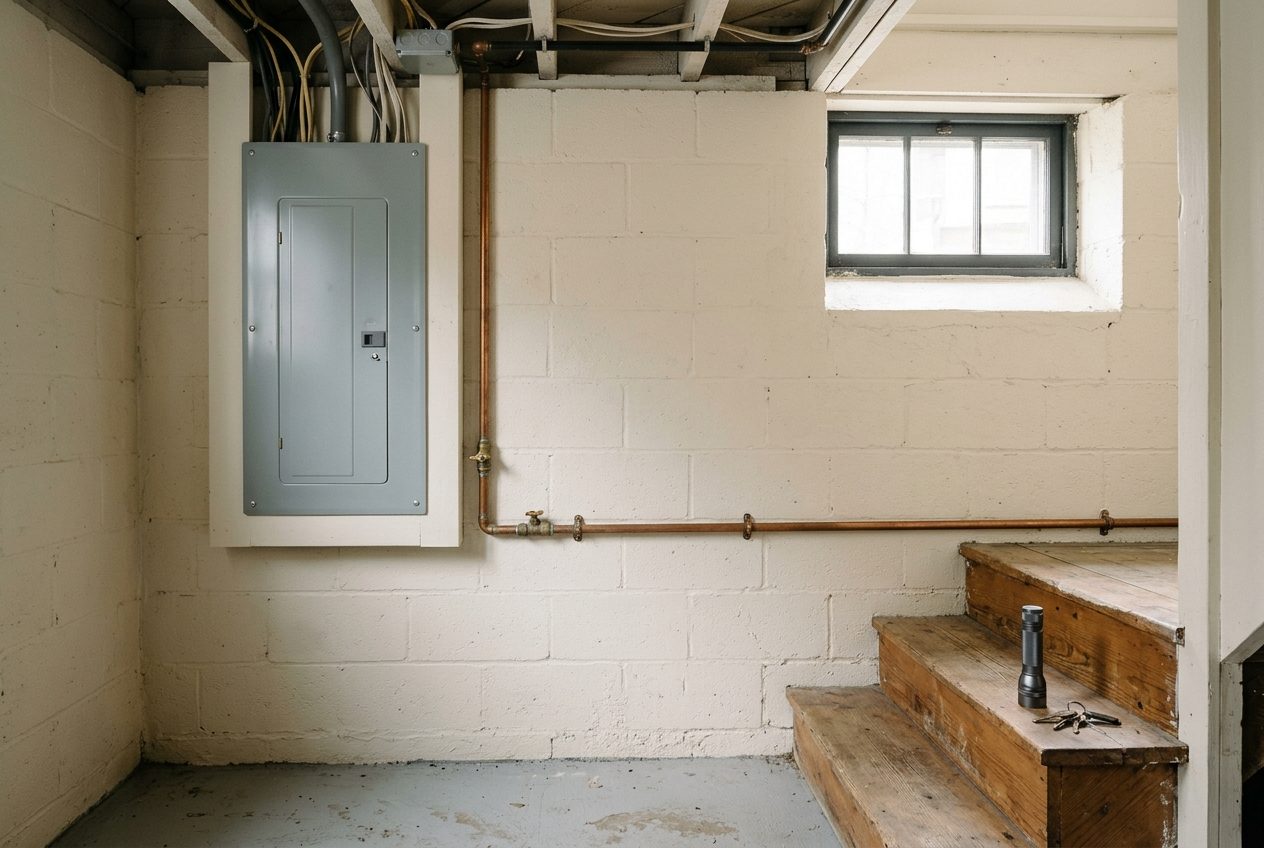
What else should you check while you are in the basement?
The furnace or boiler rarely fails alone. While you are down there, look at the things around it:
- The water heater: its age, the venting and any rust at the base.
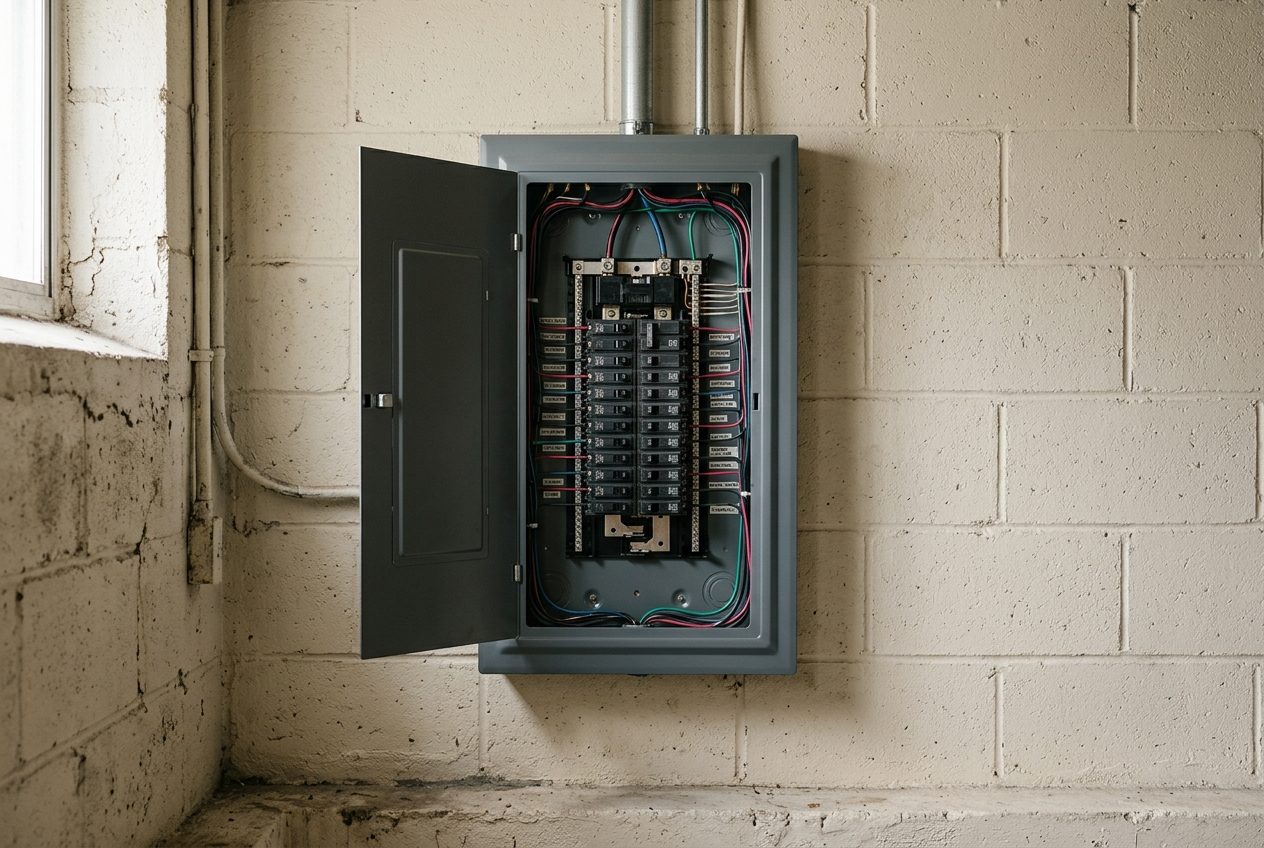
- The electrical panel and wiring that feed the heating system. What Should You Know About Old Wiring Before You Buy a Pittsburgh Home? covers what I look at.
- The chimney and flue, including the cleanout and the condition of the liner.
- The oil tank, if the house uses oil. Ask where the tank is, how old it is, and whether it has ever been inspected or removed.
- The ductwork or piping, for insulation, leaks and unprofessional patches.
For a wider list of what I look at in an older house, I put the main points in What Should I Look for When Buying an Older Pittsburgh Home? and the system-by-system view in What Should I Inspect Before Selling an Older Home? 5 Major Systems to Check. Both help from the buyer's side too.
What is my builder's-eye rule of thumb?
I treat the heating system the way I would treat the engine in a used truck. The age is the first question and the service record is the second. The sound, the smell and the way it starts on a cold morning are the third. A cared-for system at 18 years can be a better buy than a neglected one at 10.
What I will not do is let a buyer fall in love with the kitchen and find out in January that the house is heated by something nobody has looked at in a decade. Get the number, put it in your budget, and decide with the cost in front of you.
FAQ
How old is too old for a furnace or boiler?
ENERGY STAR lists a furnace or boiler more than 15 years old as a sign to consider replacing it, along with frequent repairs and rising energy bills. Age is a planning signal, not a verdict, so read it with the service history.
Should I have a separate heating inspection before I buy?
If the system is old, the inspector flags something, or there are no service records, yes. A licensed heating professional can inspect the equipment and venting and give you a written replacement price before your inspection period ends.
Can I ask the sellers to replace an old furnace or boiler?
You can ask for a repair, a replacement, a credit, a price reduction or a home warranty. What you get depends on the contract, the condition of the system and the market, and your agent can help you decide what to ask for.
Do I need a carbon monoxide alarm if the house has a furnace or boiler?
Yes. The Consumer Product Safety Commission advises CO alarms on each floor and near sleeping areas, with the batteries tested routinely. Check the ones in the house, and add new ones on move-in day.
If you are weighing a house with an older heating system and want a builder's eye on the numbers before you write the offer, book a 30-minute call. Bring the listing and the inspection report.