Halloween is one night, and it asks a lot of a neighborhood: dark streets, excited kids, costumes that block sight, and a lot of candy. A little planning before you leave the house is what keeps it fun.
Aubre J. Stacknick is a Global Real Estate Advisor with Piatt Sotheby's International Realty in Pittsburgh, PA, helping buyers and sellers across Western Pennsylvania see a home through a builder's eyes. I look at porches, steps and walkways for a living, so this post covers the street and the front door. I am not a doctor, and this is general safety information, not medical advice.
How should you check Halloween candy?
Wait until you are home. The FDA says children should not snack from their bags while they are out, and suggests a light meal before they leave so they are less tempted. Then sort the candy together under good light.
- Keep only commercially wrapped treats. The FDA says to tell children not to accept, and especially not to eat, anything that is not commercially wrapped.
- Look for tampering. The FDA lists an odd appearance, discoloration, tiny pinholes and torn wrappers. Throw away anything that looks suspicious.
- Skip homemade treats from people you do not know, especially if your child has an allergy. The FDA says not to let a child with an allergy eat home-baked goods.
You can read the full guidance at the FDA's page, Halloween Food Safety Tips for Parents.
What about food allergies?
Read every label, every time. The American Academy of Pediatrics notes that candy without a given allergen can still cause a reaction if it was made in a facility that processes that allergen. Children with food allergies should carry their prescribed emergency medicine, such as an epinephrine auto-injector, and the adults with them should know the emergency plan.
If you hand out candy, the AAP suggests considering non-edible treats such as glow sticks, bubbles or stickers. That is a kind choice for the child who cannot eat what is in the bowl.
What are the choking risks for little ones?
The AAP says babies and toddlers should avoid hard candies, caramel apples, popcorn, gum, small candies, gummy candy, pumpkin seeds and whole nuts. It also lists candy wrappers, stickers, small toys and temporary tattoos as choking hazards. The FDA gives similar advice: for very young children, take gum, peanuts, hard candies and small toys out of reach. Keep an eye on what is in your child's mouth while you walk.
How do you keep children visible to drivers?
Do not assume a driver will see a small person in a dark costume. The AAP says not to assume drivers will stop, since they may have trouble seeing trick-or-treaters.
- Choose bright or reflective costumes and treat bags, or add reflective tape or glow-in-the-dark elements.
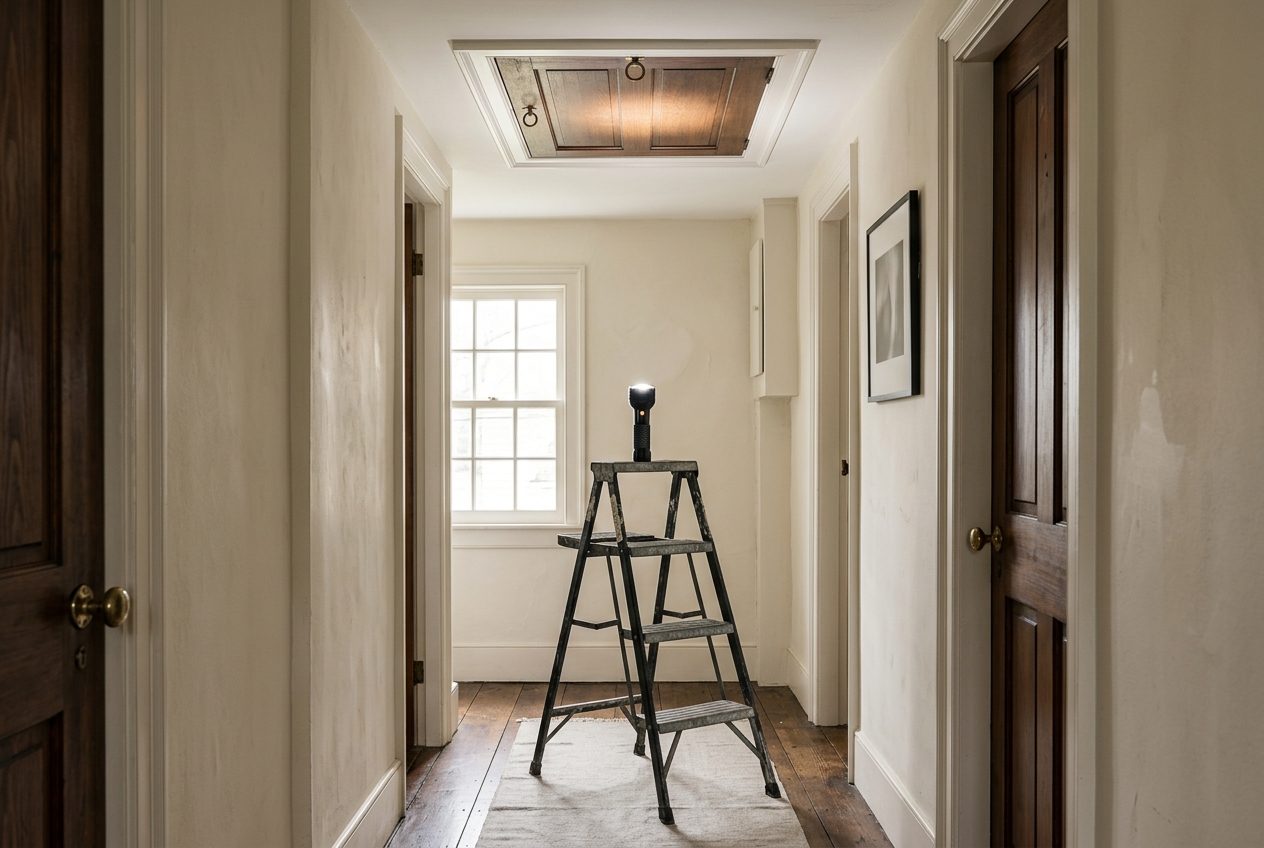
- Carry a flashlight or glow stick so children can see and be seen. Safe Kids Worldwide recommends this, and so does the Consumer Product Safety Commission (CPSC).
- Stay on well-lit streets and use sidewalks. If there is no sidewalk, walk on the far edge of the road, facing traffic.
Safe Kids Worldwide has more in its Halloween safety tips.
How should children cross the street?
- Cross at corners and crosswalks, using signals, and look left, right and left again.
- Do not cross between parked cars or out of driveways and alleys.
- Put phones and headphones away. The AAP asks parents to talk with kids about distracted walking.
- Walk, do not run, and make eye contact with a driver before stepping in front of a car.
If you are driving on Halloween evening, slow down on residential streets and watch the curbs. Children dart.
Who should go with them?
Safe Kids Worldwide says parents should join children under 12. The AAP says always go with young children, and that older children should go in groups with a planned route and a set time to be home. Both suggest a flashlight after dark. Agree on the route before you leave, and tell your child never to go inside a home or a car for a treat.
Teach younger children how to call 9-1-1 if they get lost, as the AAP recommends.
What should costumes do?
A costume that fits is a safer costume. The CPSC and the AAP both say to avoid costumes that are long or baggy, since children trip. The AAP adds that shoes should fit, hats should not slide over the eyes, and long swords, canes or sticks are best left home.
Masks can block sight and breathing, so the CPSC says eye and nose openings should be wide enough, and that makeup can be a safer choice. Safe Kids Worldwide also suggests face paint over a mask. If you use makeup, the AAP says to choose non-toxic makeup and test a small patch of skin first.
The CPSC's release, Safety Tips to Keep Hazards from Haunting Your Halloween, covers costumes in more detail.
What should you check at your own front door?
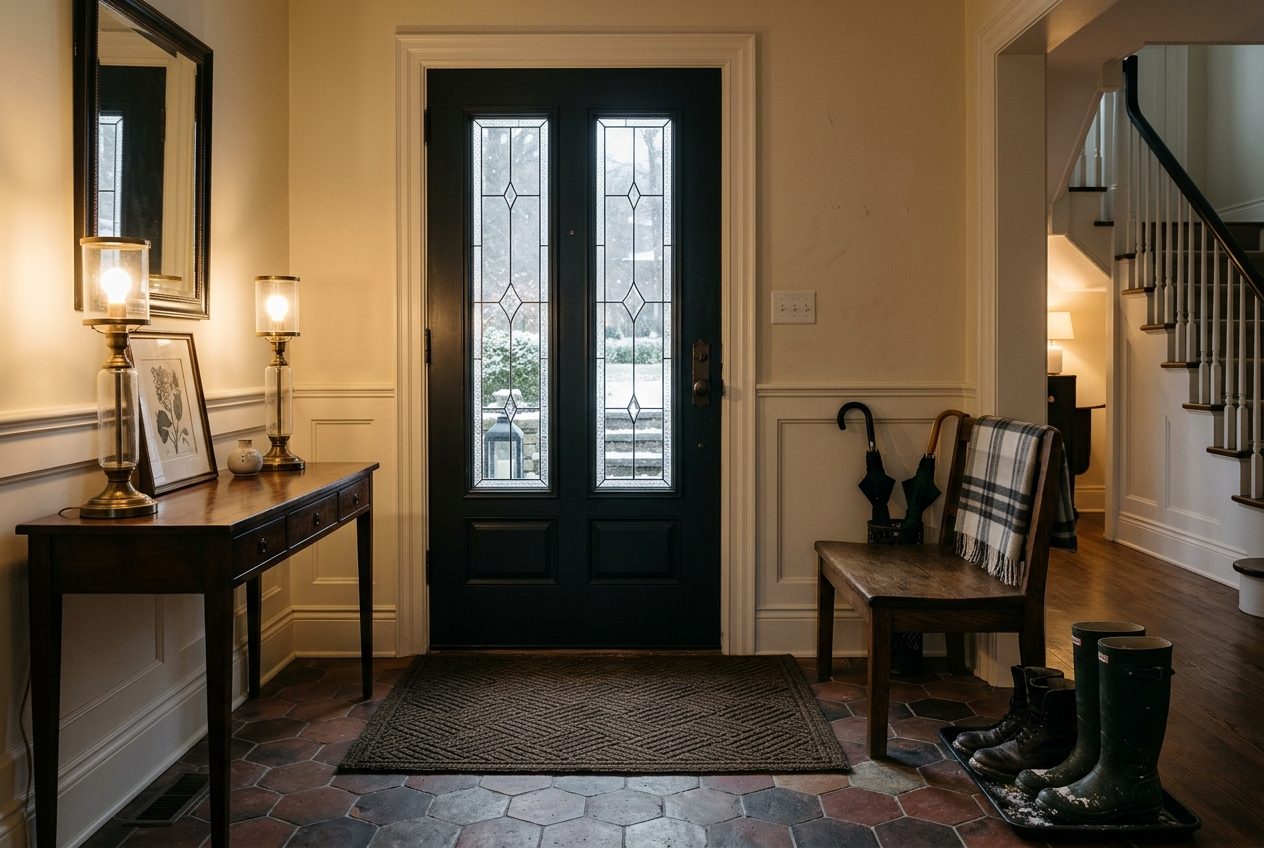
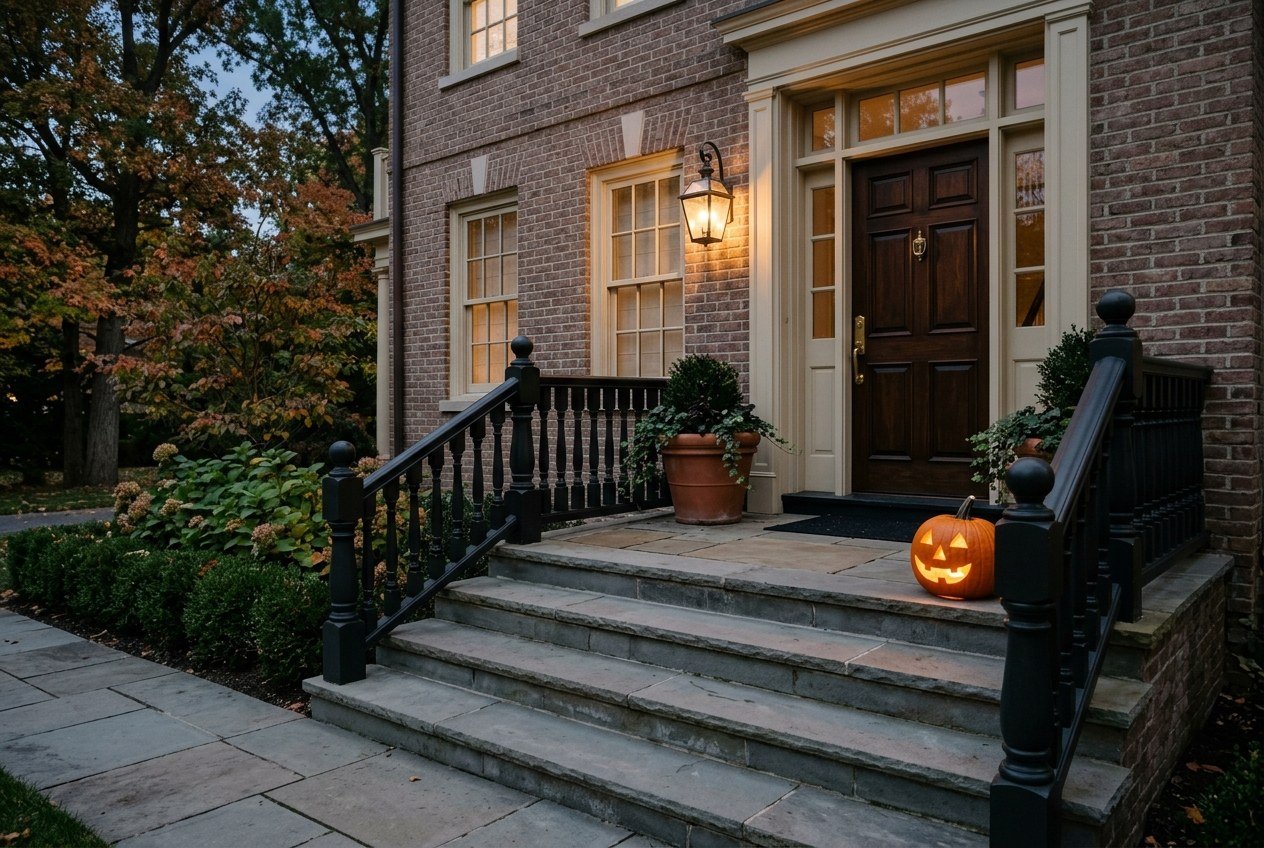
This is the builder's part. If you hand out candy, your porch is part of the neighborhood's route, and children arrive in the dark, in costumes, often looking at the bowl instead of their feet.
- Light the way. The AAP says children should only visit homes with a porch light on, so turn yours on, and make sure the steps are lit too.
- Clear the path. The CPSC says to remove obstacles from lawns, steps and porches. Move hoses, planters, decorations and loose doormats out of the walking line.
- Check steps and rails. Loose treads, a wobbly railing or an uneven landing are easy to miss in daylight. Test the handrail before dark.
- Use battery-powered lights in jack-o'-lanterns instead of open flames, as the CPSC recommends, and keep candles away from anything that can burn.
- Keep cords out of the way. Lights and inflatable decorations on extension cords across a walkway are a trip hazard, and outdoor outlets should be in good shape. If your home has older wiring, read What Should You Know About Old Wiring Before You Buy a Pittsburgh Home?
Thinking about buying an older house with steps, porches and walkways you have not walked in the dark? What Should I Look for When Buying an Older Pittsburgh Home? is the checklist I would start from.
What are the common mistakes?
- Letting children eat candy on the street before it is checked
- Wearing dark costumes with no reflective tape or light
- Costumes and shoes that are too long or do not fit
- Looking at a phone while crossing
- Letting a young child go without an adult
- Leaving a dark porch, loose decorations or a cord across the steps
FAQ
When should you check Halloween candy?
Check it at home, before anyone eats it. The FDA says children should not snack from their bags while out, and should wait so a parent can look it over first. Throw away anything unwrapped, torn, discolored or with tiny pinholes.
Can fun-size candy still be a problem for allergies?
Yes. The AAP says candy without a given allergen can still cause a reaction if it was made in a facility that processes that allergen, so read every label.
How old should a child be to trick-or-treat without an adult?
Safe Kids Worldwide says parents should join children under 12. The AAP says older children should go in groups with a planned route and a time to be home. You know your child, so decide with that in mind.
What should my porch have on Halloween night?
A working porch light, lit and clear steps, a sound handrail, and no cords or decorations across the walking path.
If you are thinking about a move and want a builder's read on a home's porch, steps and walkways before you buy, book a 30-minute call. Bring the address.