Yes, if the home has a private well or a septic system, test and inspect both before you commit. Pennsylvania does not regulate private wells, so nobody else is checking the water for you, and Penn State Extension says that without a septic inspection a buyer generally has no basis to ask for repairs or a price reduction after closing.
Some homes are on public water and public sewer. Some are not. If the home you want has a private well or a septic system, your inspection plan needs two extra pages that a general home inspection will not fill in for you.
Here is how I think through both, and what the Penn State and state sources actually say.
Aubre J. Stacknick is a Global Real Estate Advisor with Piatt Sotheby's International Realty in Pittsburgh, PA, helping buyers and sellers across Western Pennsylvania see a home through a builder's eyes. I look at what is behind the finish, and with a well and a septic system, the finish is buried in the yard.
How do you know if a home has a well or septic system?
Ask early, and do not guess from the street. The listing, the seller's property disclosure statement, and your county or township records can tell you how the home gets water and handles sewage. The disclosure form the Pennsylvania Real Estate Seller Disclosure Law requires covers water and sewage systems (68 Pa.C.S. § 7304), and the seller must disclose known material defects before the agreement of sale is signed (§ 7303). The statute is on the Pennsylvania Department of State's site.
The same law does not require the seller to investigate in order to complete that form (§ 7308). So the disclosure tells you what the seller knows, not what is true. Testing fills the gap.
Who regulates private wells in Pennsylvania?
Nobody sets a construction or water quality standard for the well on your lot. The Pennsylvania Department of Environmental Protection states on its private wells page that it does not regulate private wells. Penn State Extension says that apart from a few county or local ordinances, there are no statewide construction standards for private wells, though state law does require well drillers to complete a well log for every well. You can read that in Penn State Extension's Private Water Systems FAQs.
That means the testing is up to the owner. As a buyer, you are about to become the owner. A water test before closing is how you learn what you are buying.
What should you test a private well for?
Penn State Extension gives a baseline schedule for well owners: test for coliform bacteria every year, and for pH and total dissolved solids every three years. Beyond that, its guidance is to test based on what is around the property and on what you notice in the water. Penn State's best management practices for private water wells pairs land uses with tests:
- Agricultural operations nearby: nitrate, coliform bacteria, and pesticides
- Coal mining: pH, iron, and manganese
- Gas drilling: sodium, chloride, and barium
- A dump, landfill, or factory: metals and volatile organic compounds
- Heavily salted roads: sodium, chloride, and total dissolved solids
Look at the property and its surroundings, and ask the lab or a water professional which tests fit. If the water has stains, odors, or a taste, mention it. Penn State's FAQs note that other concerns, including lead and nitrates, come up based on land use and symptoms.
Use a certified lab, not a kit from a vendor. Penn State's FAQs advise a certified commercial lab over in-home tests sold by vendors and say numerous state-certified labs operate across Pennsylvania. It lists bacterial testing as typically costing $20 to $40, with other individual tests ranging from a few dollars to over $100. Prices vary, so get a quote.
What else should you check on the well itself?
A water test tells you about the water. It does not tell you about the well. Penn State recommends an annual look at the well area: keep it clean and accessible, check the casing for cracks, holes, or corrosion, confirm a sanitary well cap, check that pump wiring runs through conduit, and avoid fertilizer and pesticide use within 100 feet. It also advises a professional inspection of the well at least every 10 years.
Ask the seller for the well log if one exists, and for any past water test results, the age of the pump, and any treatment equipment. If there is a softener or filter, ask who services it and for the service records.
What does a septic inspection involve?
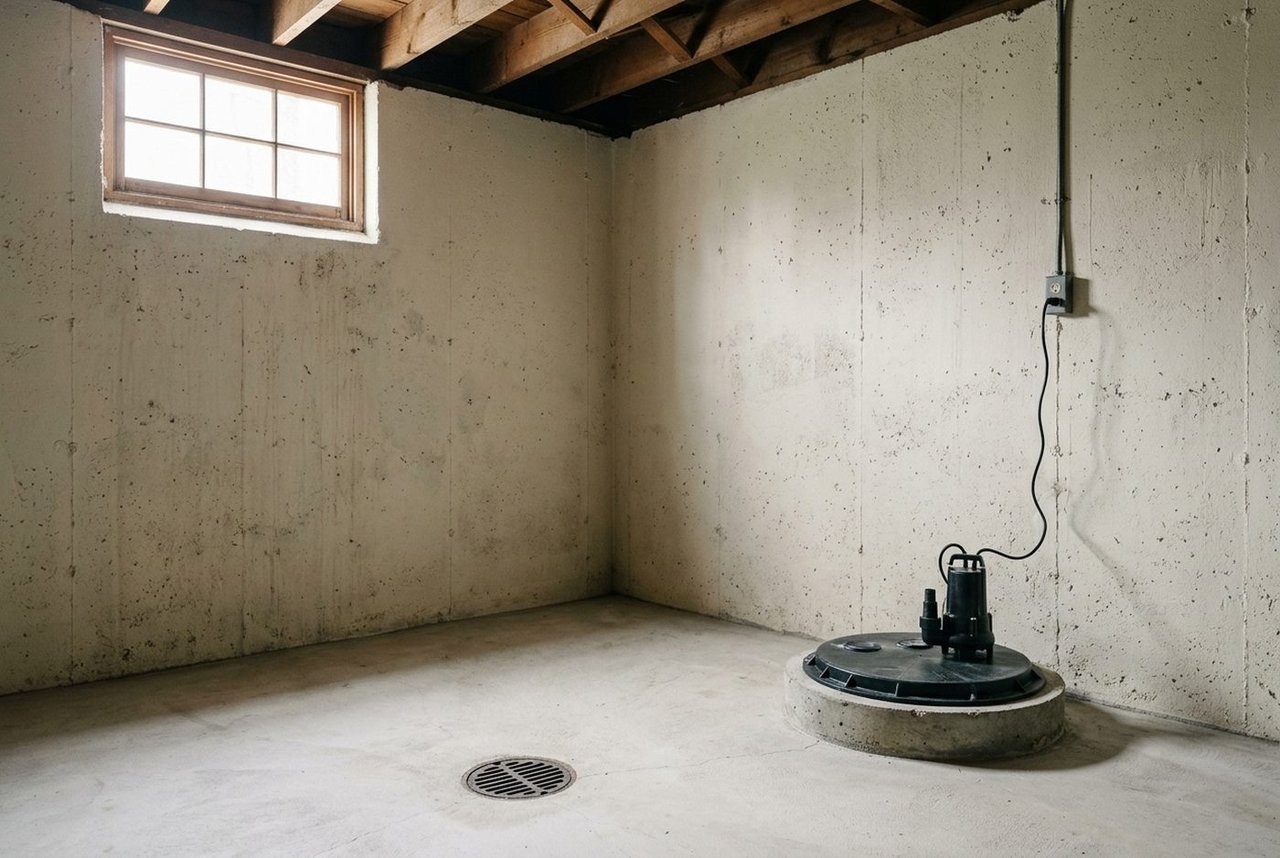
A septic system is a tank, pipes, and a drainfield that treats wastewater in the soil, plus pumps and alarms in some designs. Penn State Extension explains that a PSMA/NOF on-lot inspection looks at the whole system: the tank, the pipes, the soil treatment area, and components such as dosing pumps and alarms. All treatment and dose tanks must be pumped during the inspection so the inspector can see inside them. Read the details here: On-Lot Septic System Inspections During Real Estate Transactions.
The inspector may also run a hydraulic load test, which checks whether the drainfield can handle the home's daily wastewater. Penn State says that test is usually called for when normal flow cannot be confirmed, for example after a vacancy of more than a week or pumping within the last 30 days, when the drainfield does not seem to absorb effluent, or when conditions are unclear.
The inspection should be done by a trained, certified septic inspector. Ask whether your general home inspector holds that certification, and do not assume so. Penn State says you can find one through the PSMA service provider directory or by asking your county Extension educator.
What does it cost, and what does a failure cost?
Penn State's fact sheet lists cost examples for south-central Pennsylvania as of 2026: a base inspection of about $350 to $700, required tank pumping of about $275 to $500, and a hydraulic load test of about $500 to $1,000 more when needed. Western Pennsylvania prices will differ, so ask local inspectors for quotes.
For comparison, the same fact sheet says repair or replacement of a septic system can run roughly $10,000 to $60,000 or more, depending on the system type and location. It also notes that switching to public sewer is not always possible and can be costly where available. Weigh the inspection fee against that number.
Why not just rely on the sewage enforcement officer?
A municipal Sewage Enforcement Officer handles regulatory oversight. Penn State's fact sheet says that is a different job from a buyer's inspection, and that an SEO generally considers a system to be malfunctioning only when wastewater surfaces or backs up into the home. A system can be failing slowly long before it does either. For questions about local requirements or permits for the property, contact the township's SEO or the Department of Environmental Protection.
How do you build this into your offer?
Do it before you write the offer, not after. Penn State notes that a buyer can request a septic inspection contingency in the purchase agreement, which makes the contract depend on a certified inspection, and that inspection costs and needed repairs can often be negotiated. Penn State also states plainly that a PSMA/NOF inspection is not a warranty or guarantee.
I am not an attorney, so ask your attorney how the contingency language and timelines work in your agreement of sale. And ask your health department or township what is required in your area, since local rules can differ.
In practice, here is the order I suggest:
1. Confirm in the listing and disclosure whether the home is on a well, septic, or both.
2. Line up a certified septic inspector and a certified water lab before you write the offer.
3. Build the inspection and water-test timeline into the agreement, with your attorney.
4. Collect records from the seller: pumping history, well log, past tests, and service records.
5. Read the results before the window closes, and decide whether to repair, renegotiate, or walk away.
How does this fit with the rest of your inspections?
A well and septic system add to the inspection plan. They do not replace the general inspection, the sewer scope if the home is on public sewer, or radon testing. I cover those in What Does a Home Inspector Not Check Before You Buy a House?, What Does a Sewer Scope Find, and Is It Worth It on an Older House?, and Should You Test a Pittsburgh Home for Radon Before You Buy?
For the larger picture of how I screen an older property, start with How Can I Tell If a House Has Expensive Problems Before I Buy It?
What are the common mistakes?
- Assuming the general home inspection covers the well and septic system
- Testing the water once and never again
- Using a home kit instead of a certified lab
- Skipping the pumping record request
- Waiting until after closing to learn what the system needs
- Treating a passing result as a guarantee
FAQ
Does Pennsylvania require well water testing when you buy a home?
Pennsylvania's DEP states that it does not regulate private wells, and Penn State Extension notes there are no statewide construction standards for them. Testing is up to the buyer, so ask your attorney and your lender whether your agreement or your loan has any requirements.
How often should private well water be tested?
Penn State Extension recommends testing for coliform bacteria every year and for pH and total dissolved solids every three years, with additional tests based on nearby land uses and on what you notice in the water.
Is a septic inspection part of a regular home inspection?
Penn State describes a septic inspection as more detailed than a typical home inspection and says it should be done by a trained, certified inspector. Do not assume your general inspection includes it.
How much does it cost to replace a failed septic system?
Penn State Extension's fact sheet says repair or replacement can cost roughly $10,000 to $60,000 or more, depending on system type and location.
If the home you like has a well or a septic system and you want to line up the right people before you write an offer, book a 30-minute call. Bring the listing.