If you want an urban home without the full upkeep of a detached house, condos and townhomes in Lawrenceville and the Strip can be a compelling fit. These two Pittsburgh neighborhoods offer a mix of character, convenience, and newer housing options, but the tradeoffs are real too. If you are weighing lifestyle, parking, monthly costs, and long-term value, this guide will help you sort through what matters most. Let’s dive in.
Why buyers consider attached living here
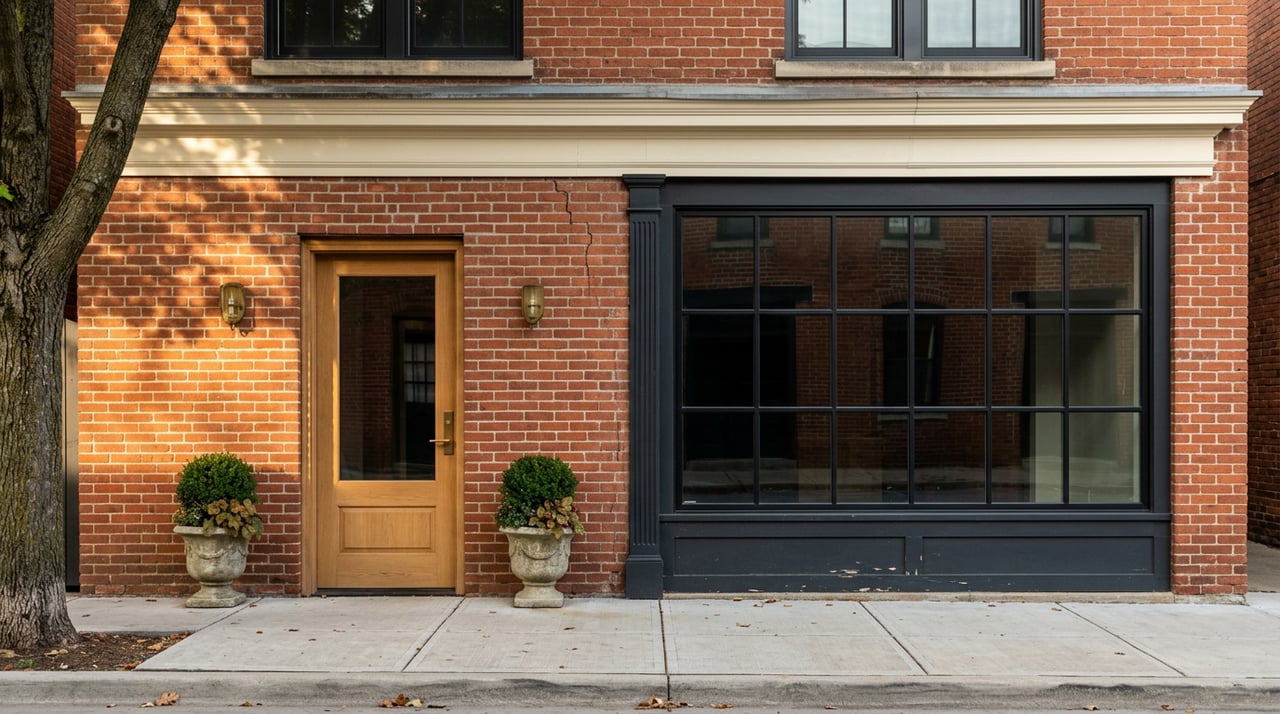
Central Lawrenceville and the Strip both appeal to buyers who want to stay close to restaurants, markets, trails, and major job centers. The City describes Lawrenceville as one of Pittsburgh’s largest neighborhoods, with reclaimed rowhouses and newly built townhomes closer to Downtown, plus larger brick homes farther east. The Strip has a different feel, centered on a compact urban district with a strong market and dining identity and a growing residential base that connects Downtown to Lawrenceville and the East End.
That location story helps explain the price gap. As of May 2026, Redfin reported a median sale price of $415,610 in Central Lawrenceville and $677,272 in the Strip District, compared with $259,844 citywide in Pittsburgh. In simple terms, buyers here are often paying a premium for access, walkability, and an urban daily routine.
Common condo and townhome types
Attached housing in this corridor does not come in just one form. In Lawrenceville, you will commonly see renovated loft buildings, newer condo buildings, and townhouse-style infill. In the Strip, the pipeline includes condos, townhomes, and mixed-use residential projects, with more development still underway.
Loft conversions
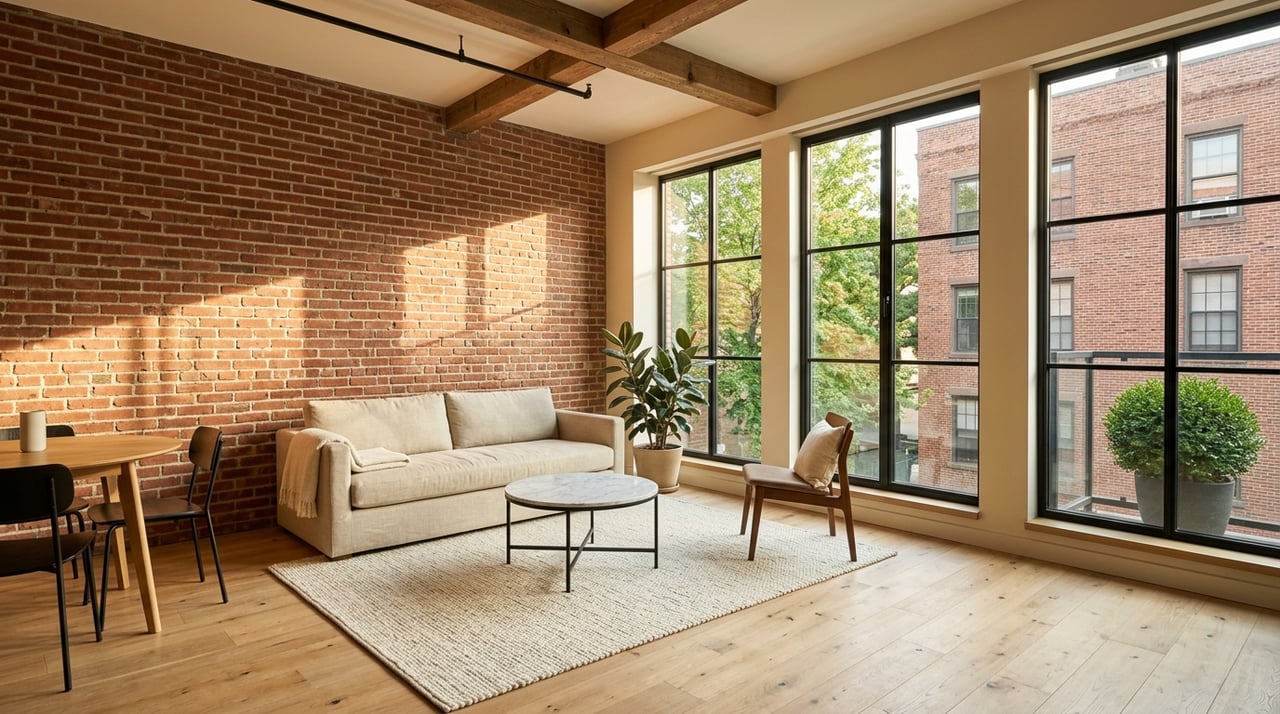
Adaptive reuse is part of the story in both neighborhoods. In the Strip District, projects like the Cork Factory and Otto Milk turned former industrial properties into residential communities, including loft apartments and condominiums. These homes often attract buyers who like exposed materials, open layouts, and historic industrial character.
One important detail is that loft describes the style more than the ownership structure. Some loft-style buildings are condos, while others are rentals. If you are shopping this segment, you will want to confirm whether you are buying a condo interest, a townhome, or looking at a building that is not for-sale housing at all.
Newer condo buildings
Newer condo inventory can offer a more lock-and-leave lifestyle. Lawrenceville Lofts is one example of a smaller condo building format, with 25 units and amenities that include private terraces, river views, integral garage parking, EV charging, bicycle storage, a fitness center, and rooftop spaces. For buyers who want lower exterior maintenance and shared amenities, this style can be attractive.
The Strip District also continues to add condo product. Strip District Neighbors’ 2025 report points to projects such as 2500 Smallman Condominiums and a condo-and-retail project at 1700 Penn. Inventory is evolving, which means availability can change quickly from one project and one season to the next.
Townhome-style infill
Townhomes often appeal to buyers who want more space and privacy than a condo usually offers. In Lawrenceville, newer attached homes can function as a strong alternative to a detached single-family house, especially for buyers who still want garages, multiple floors, and outdoor space. Aura District is a high-end example, with townhomes marketed at 3 to 4 bedrooms, roughly 2,900 to 3,500 square feet, two-car garages, two outdoor spaces, and an optional elevator.
The Strip also has new townhome supply in the pipeline, including five new townhomes at 2700 Penn Avenue noted in the 2025 neighborhood development report. If your priority is newer construction with an urban address, townhomes may open up options that feel more house-like while keeping you in a walkable setting.
Lifestyle tradeoffs to weigh
The biggest reason buyers choose condos and townhomes here is lifestyle. You can live close to dining, shopping, trails, and transit, often with less day-to-day exterior maintenance than a detached home. That can be especially attractive if you travel often, are relocating, or simply want a more streamlined routine.
Still, every advantage comes with a tradeoff. In Lawrenceville and the Strip, attached living often means less private yard space, closer neighbors, tighter parking conditions, and a higher price point than the broader city average. The right fit depends on how much you value convenience, walkability, and amenities compared with space and privacy.
Parking matters more than many buyers expect
Parking can be one of the most important details in your decision. Pittsburgh’s residential parking permit program is meant to preserve resident parking near commercial areas, but the City is clear that a permit does not guarantee a space. In practical terms, that makes deeded parking, assigned parking, or a private garage a major value factor.
This matters in both neighborhoods, but especially in the Strip, where curb management is still an active issue. The City’s Strip District Mobility Plan notes that only four streets carry traffic through the district: Liberty, Penn, Smallman, and Railroad. Ongoing public work includes sidewalk reconstruction, new crosswalks, bike facilities, and lane-rightsizing, and DOMI is also running a 2026 Strip District parking study.
If parking is high on your list, ask specific questions early:
- Is parking deeded, assigned, leased, or first come, first served?
- Is the space in a garage, on-site lot, or curbside permit zone?
- Are there guest parking rules?
- Is there EV charging now, or room to add it later?
- If there is no dedicated space, what is the realistic day-to-day plan?
Transit and car-light living
For many buyers, one of the best parts of this corridor is that car-light living is realistic. Pittsburgh Regional Transit highlights route 91 for Lawrenceville, route 88 for the Strip-to-Lawrenceville and East Liberty corridor, and route 54 as a cross-town route serving the Strip District, North Side, Oakland, Bloomfield, and South Side. That gives many residents multiple ways to move through the city without relying on a car for every trip.
That said, transit convenience can vary by block and by building. A home that looks close on a map may feel different in real daily use depending on hills, street design, and your nearest stop. If this is part of your buying decision, it helps to think beyond the address and into your actual routine.
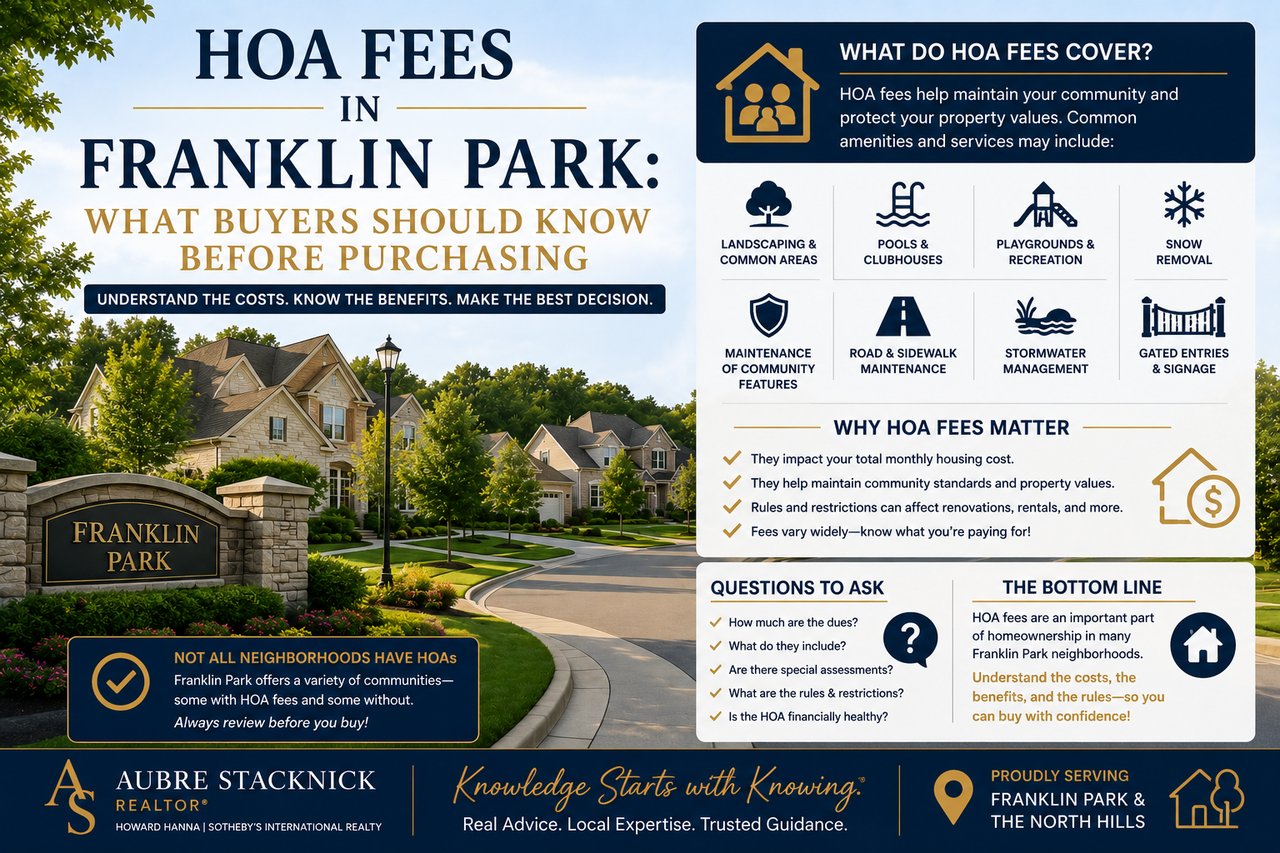
Understanding HOA fees and monthly carrying costs
One of the biggest surprises for first-time condo and townhome buyers is that the monthly payment is not just mortgage and taxes. In Pennsylvania, condo associations can adopt budgets for revenues, expenditures, and reserves, collect assessments for common expenses, regulate common elements, and impose certain fees related to those shared areas. Planned communities have their own legal framework as well, with the Attorney General noting that the Uniform Planned Community Act applies to planned communities with more than 12 units.
For you, the practical takeaway is simple: monthly fees can vary a lot because buildings operate differently. A small conversion with limited common space may have a very different fee structure than a full-amenity condo building or a garage-equipped townhome community. The fee itself is only one number, so it is worth understanding what it covers and how the association plans for future costs.
When reviewing an HOA or community, look closely at:
- What the monthly fee includes
- Reserve funding and overall budget health
- Building insurance responsibilities
- Rules around pets, rentals, and use of common areas
- Any upcoming capital projects or special assessments
What the development pipeline means for buyers
Both neighborhoods continue to evolve, but not all visible new construction is for-sale inventory. Lawrenceville Corporation is tracking several larger residential projects, including 50-unit apartments, 200-plus-unit projects, 334 units, and 15 rental townhomes. In the Strip, a 2025 neighborhood report tracks 524 units under construction and 1,985 planned, including condo and townhome projects.
For buyers, that creates two practical realities. First, newer for-sale inventory may be more limited than the amount of construction activity suggests. Second, flexibility can help, whether that means considering a smaller condo building, a resale townhome, or a different move-in timeline.
How to decide between a condo and a townhome
The best choice usually comes down to how you live. A condo may be the stronger fit if you want a simpler exterior maintenance setup, shared amenities, and a more lock-and-leave feel. A townhome may make more sense if you want more square footage, a garage, more separation from neighbors, or a layout that feels closer to a single-family home.
Here is a quick comparison:
| Feature | Condo | Townhome |
|---|---|---|
| Maintenance style | Often more shared | Often a mix of shared and owner responsibility |
| Amenities | More common in larger buildings | Less common, depends on project |
| Privacy | Typically less | Typically more |
| Layout | Usually single-level or stacked | Often multi-level |
| Parking | Varies widely by building | More likely to include garage parking |
| Outdoor space | Limited or shared in many projects | Often more private outdoor space |
A smart buying approach in Lawrenceville and the Strip
In urban neighborhoods like these, the details matter. Two homes with similar square footage can live very differently based on noise, parking, building rules, fee structure, and block-by-block access to transit and daily amenities. That is why a careful evaluation matters just as much as the listing photos.
A strategic approach usually starts with your priorities. If you know your must-haves, such as garage parking, elevator access, lower monthly fees, newer construction, or a more house-like floor plan, you can narrow the search faster and avoid expensive compromises. A property-by-property review is especially useful in areas where adaptive reuse, mixed-use projects, and evolving inventory create a wide range of ownership structures and monthly costs.
If you are considering condo or townhome living in Lawrenceville or the Strip, working with an advisor who understands not just pricing but also building type, condition, and long-term tradeoffs can make the process much clearer. When you are ready to talk through your options, connect with Aubre Stacknick for thoughtful guidance tailored to your goals.
FAQs
What types of condos and townhomes are common in Lawrenceville?
- In Lawrenceville, buyers often see loft conversions, newer condo buildings, and townhouse-style infill, with options ranging from smaller condo buildings to larger luxury townhomes.
What types of attached homes are available in the Strip District?
- The Strip District includes loft-style conversions, condo projects, townhomes, and mixed-use residential developments, with more inventory still under construction or planned.
How do condo and townhome prices in Central Lawrenceville and the Strip compare to Pittsburgh overall?
- As of May 2026, Redfin reported median sale prices of $415,610 in Central Lawrenceville and $677,272 in the Strip District, compared with $259,844 citywide in Pittsburgh.
What should buyers know about parking in Lawrenceville and the Strip District?
- A residential parking permit does not guarantee a space, so deeded, assigned, or garage parking can be a major value factor when comparing properties.
What do HOA fees usually cover in Pennsylvania condos and planned communities?
- Fee structures vary, but they may reflect the association’s budget, reserves, insurance responsibilities, common-area upkeep, and building or community operations.
Is car-light living realistic in Lawrenceville and the Strip District?
- Yes, for many buyers it is, since Pittsburgh Regional Transit highlights routes serving Lawrenceville, the Strip, and nearby neighborhoods, though convenience still varies by block and routine.